Maintaining a Regular Practice as an International YA

Meet Fleur, a meditator who lives in the Netherlands. This week, Fleur shares some of her strategies for sustaining a practice as an international YA without access to a local passage meditator community. Regardless of where we live, Fleur has great tips for strengthening a daily meditation practice.

Hello dear meditator friends,

As a native of the Netherlands I have been practicing Easwaran’s method of meditation since my undergraduate years. While in Holland YA meditators are not that thick on the ground, meditation as an international YA has its own special strategy for maintaining a regular practice. In this blog I would love to share with you how I managed to build, and keep up, a solid meditation practice as an international YA. 

The UC Berkeley campus, where Fleur first discovered Easwaran and passage mediation.

The UC Berkeley campus, where Fleur first discovered Easwaran and passage mediation.

Let me first share with you how I stumbled upon Easwaran’s method of meditation. During my undergraduate years, I came to UC Berkeley on an exchange program. As a pre-medical student, I certainly needed stress relief, so I started looking for meditation classes. Coincidentally, I was about to study at the only university in the United States offering a meditation course for credit! The course was taught by an experienced professor who welcomed us by mentioning that this may be the most important skill we will ever learn. We meditated three mornings a week at 7 a.m. with 90 students on the beautiful Berkeley campus. In addition, we studied the book Passage Meditation, containing all the basic instructions to start your own practice. In this book, Eknath Easwaran says “All I ask is 30 minutes a day.” This seemed like a reasonable demand. I could not have expected that this small-time investment would slowly start to change my life.

In the midst of a busy medical and research career, and currently finding myself in medical residencies, meditation has proved itself invaluable in more ways than I can express. It has not only helped me reduce stress and increase my focus and work efficiency, but it has allowed access to inner resources to stay balanced, healthy, and happy in an overly busy life. Once I started tasting these ‘fruits’ of meditation, I knew I needed to stick with it. But how do we keep up a meditation practice in the midst of the hubbub of daily life? And how can we successfully keep up a meditation practice as an international YA?

Sustaining your enthusiasm is key

To maintain a daily meditation practice, finding ways to boost our enthusiasm is key. What are some of the things that have helped me to get up early in the morning and hit the pillow?

Firstly, I have found that spiritual fellowship is essential in keeping up my enthusiasm. In many ways, meditation is going against the current, externally in terms of what other peers are doing, as well as internally in going against our own conditioning and undesirable habits. Finding ‘allies’ who also practice meditation is very helpful, if not essential. During my student years, I found an established satsang nearby that I attended on a monthly basis. For some time we even had a YA Satsang in Amsterdam, which was very helpful and a lot of fun. We would read, do a video study and meditate together, and follow it with a shared dinner. Sometimes we’d organize an entertaining event. As my YA friends found jobs in other areas and moved away, I had to resort to alternative ways of finding spiritual fellowship. Some of us kept up a YA phone or Skype satsang, which was most useful, and the YA eSatsang turned out to be a great e-replacement! Connecting with fellow YA meditators through the eSatsang, whether actively participating myself or not, greatly inspires me.

Fleur at a retreat in Tomales, California.

Fleur at a retreat in Tomales, California.

Attending Retreats

Attending a retreat is another powerful way to boost your meditation practice in a fun way while also getting plenty of opportunities for rest and relaxation. You can check out the website or BMCM Journal to see if any regional retreats are offered in your area. In my case, there weren’t any regional retreats, so I have given myself the advantage of attending a retreat in Tomales, California, once a year. Despite the long flight, airfare, and jetlag, it has always been entirely worth it flying over from Europe, and I would highly recommend attending retreats to anyone! There is nothing else that replenishes my physical and spiritual energy as much as a retreat.  Scholarships and reduced prices are available for YAs.

Website/ blogpost

You’ve already made it to our weblog, and hopefully you like it. Although it is relatively new (we just had our one-year anniversary), it is a great way to stay connected. Inspiring stories, passages, and fun events remind me of what is really important in life.

Reading the mystics/ books

Ever since I started meditating, I have realised there is great power in spiritual literature. Although, I have to admit, it sounded boring before I ever tried it, it is very uplifting and fun. There are usually two books on my nightstand, one book by Easwaran for spiritual instruction, and one spiritual book by another author to read from before I go to bed. There are so many great, inspiring and entertaining stories out there, such as (auto) biographies about the lives of the mystics. Just tap into your YA network if you’d like any suggestions!

Regular practice

Above all, I would like to highlight the importance of maintaining regularity in our practice. The time it costs to sit down and meditate will pay itself back in so many ways. It is something that you can verify only for yourself.


Images of the YA Cohort Program

All month long we've been talking about the YAs visiting BMCM headquarters in Tomales, CA, and we're so excited to share some more about the past month!

Two weeks ago, YAs from around the world gathered in Tomales for a weeklong retreat, the culmination of our six-month long Cohort Program. Since January, the Cohorts have been gathering every other month for an online video workshop on topics like personal relationships, or finding our purpose in life. Most of us were able to attend the February YA retreat, and this month the Cohorts gathered for a weeklong retreat, and then a weekend at Dillon Beach!

YA-Cohort

For three of the YAs, this was their first weeklong retreat, and over the coming months we'll be hearing more from them about their experience. Besides the opportunity for spiritual fellowship with other YAs (and what's a retreat without a game of YA volleyball?), weeklong retreats also offer the chance to engage with dedicated passage meditators of all ages from all over the world. It was amazing to get perspectives from such a wide variety of people! The retreat's theme was "Building the Will" and the week was spent looking at different ways we can use each of the eight points to strengthen our will. From the workshops to the dinner table conversations, all the YAs remarked on how many ideas we got to take home and put into practice.

DSC_0237 Logan Tushar Pair n Share - pixlr.jpg
DSC_0222 Kate Annie Pair n Share-pixlr.jpg
YA-Weeklong
DSC_0183 Adam Lisa Pair n Share Gok Garden-pixlr.jpg
YA-Volleyball

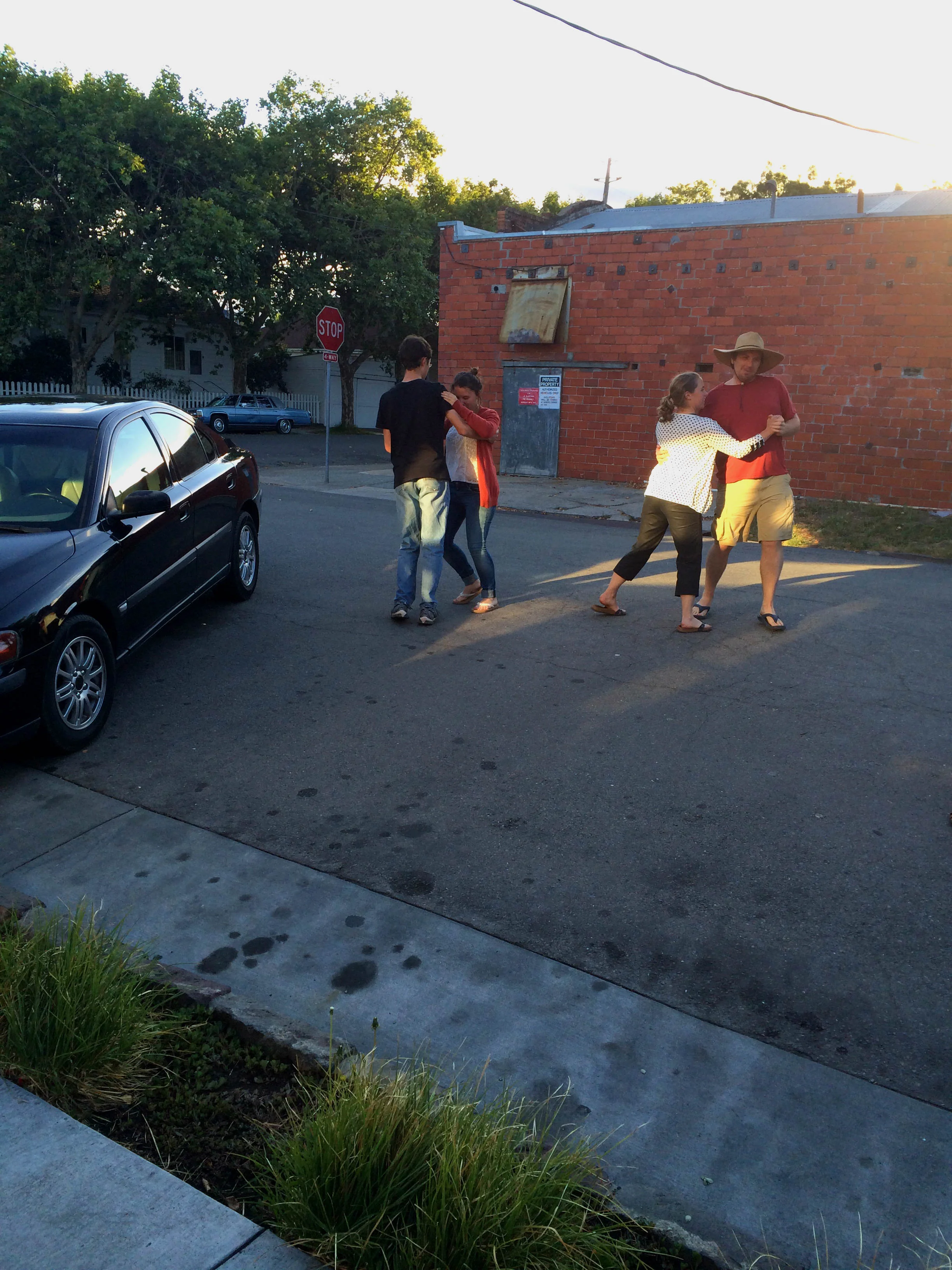
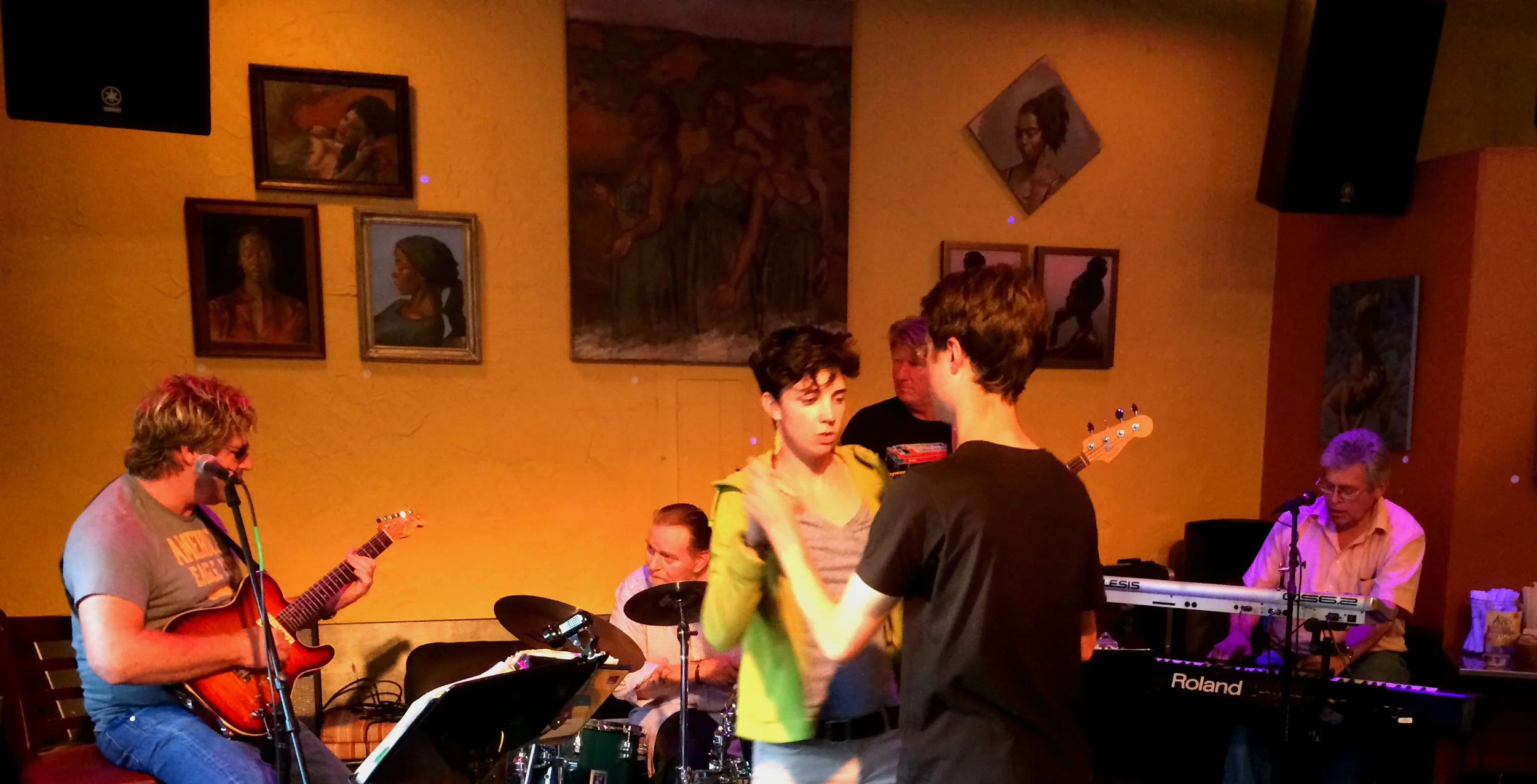
After the retreat ended, the Cohorts were in charge of our own schedule and we had such a great time! We went out to dinner at a local cafe where a country-western band was playing. Since one of our Cohorts is a born-and-raised Texan, she taught us all the two-step and we impressed the band with our enthusiasm, but not necessarily our skill . . .

YA-Cohort
YA-Cohort
YA-Cohort

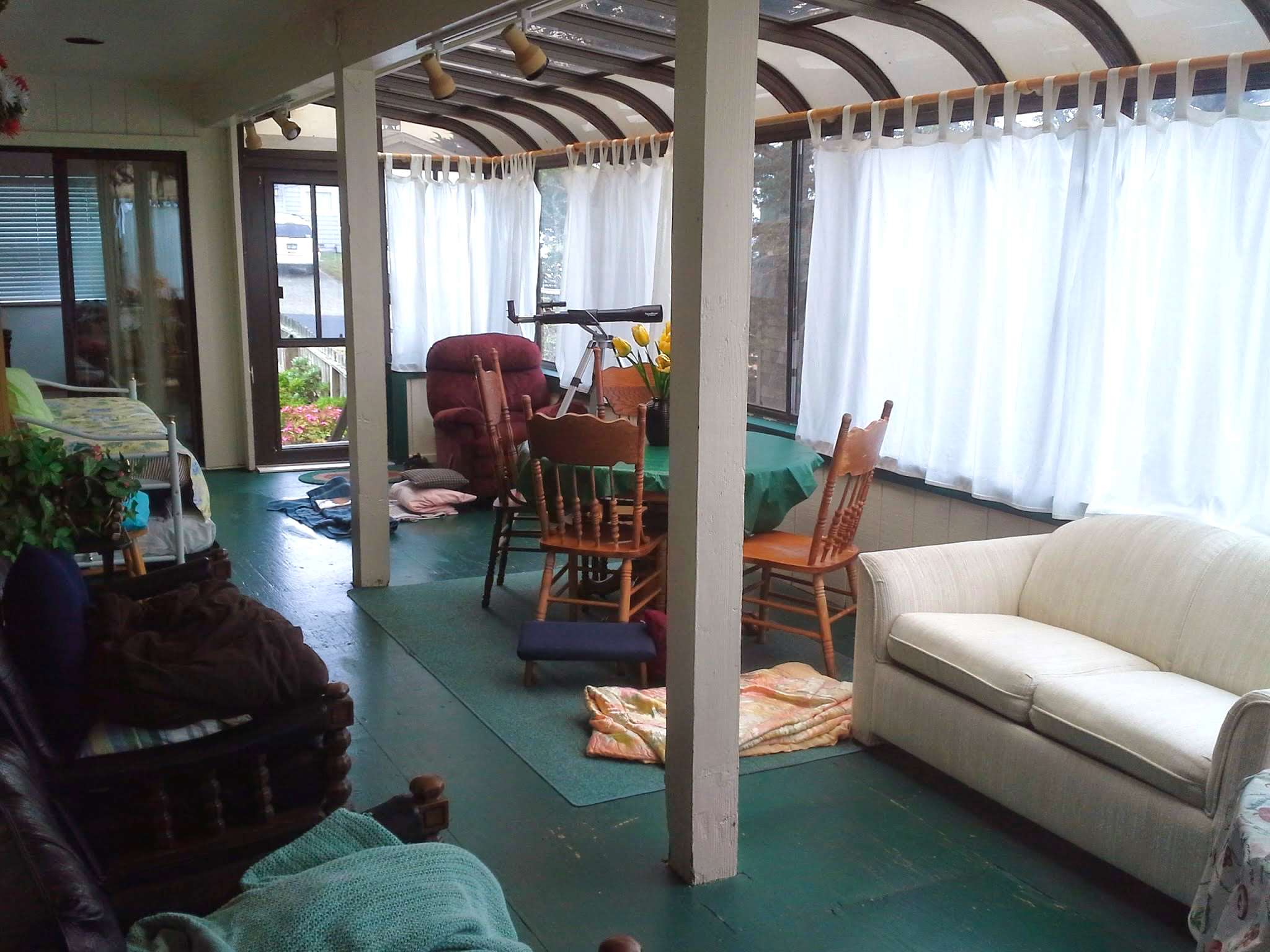
The Cohorts spent the rest of the weekend at a house on Dillon Beach. We took a beach walk with Christine Easwaran and local friends of the BMCM community, baked a pie to celebrate the birthday of a Cohort, cooked dinner and breakfast together, and - even though there were some late nights of chatting - we all meditated together bright and early in the house's sun room.

YA-Beach
DSC_0344 Beach circle - pixlr.jpg
YA-Beach
20140712_103330 - pixlr.jpg
YA-Cohort-Pie
YA-Cohort-Pie2
2014-07-12 18 - dinner pixlr.jpg
2014-07-12 19 - pixlr.jpg
YA-Beach

This was the first year we've ever offered the Cohort Program and we had such fun planning and participating! We're looking forward to next year!

Easwaran: The Power of Passages

Each month on the YA blog we’ve been highlighting one of the passages that Easwaran has recommended for meditation in his anthology God Makes the Rivers to Flow. This past week, the YA Blog team participated in a weeklong retreat held at the BMCM retreat center in Tomales, CA, and we reflected on how valuable it was to have time to memorize new passages and refresh old ones. We loved the Introduction to God Makes the Rivers to Flow, and wanted to share an excerpt with you here. There is so much great material here the excerpt is a bit long, but we hope it inspires you to look at your passages with enthusiasm! 

Easwaran-Beach

In ancient India lived a sculptor renowned for his life-sized statues of elephants. With trunks curled high, tusks thrust forward, thick legs trampling the earth, these carved beasts seemed to trumpet to the sky. One day, a king came to see these magnificent works and to commission statuary for his palace. Struck with wonder, he asked the sculptor, “What is the secret of your artistry?” 

The sculptor quietly took his measure of the monarch and replied, “Great king, when, with the aid of many men, I quarry a gigantic piece of granite from the banks of the river, I have it set here in my courtyard. For a long time I do nothing but observe this block of stone and study it from every angle. I focus all my concentration on this task and won’t allow anything or anybody to disturb me. At first, I see nothing but a huge and shapeless rock sitting there, meaningless, indifferent to my purposes, utterly out of place. It seems faintly resentful at having been dragged from its cool place by the rushing waters. Then, slowly, very slowly, I begin to notice something in the substance of the rock. I feel a presentiment . . . an outline, scarcely discernible, shows itself to me, though others, I suspect, would perceive nothing. I watch with an open eye and a joyous, eager heart. The outline grows stronger. Oh, yes, I can see it! An elephant is stirring in there! 

“Only then do I start to work. For days flowing into weeks, I use my chisel and mallet, always clinging to my sense of that outline, which grows ever stronger. How the big fellow strains! How he yearns to be out! How he wants to live! It seems so clear now, for I know the one thing I must do: with an utter singleness of purpose, I must chip away every last bit of stone that is not elephant. What then remains will be, must be, elephant.” 

When I was young, my grandmother, my spiritual guide, would often tell just such a story, not only to entertain but to convey the essential truths of living. Perhaps I had asked her, as revered teachers in every religion have been asked, “What happens in the spiritual life? What are we supposed to do?” 

My Granny wasn’t a theologian, so she answered these questions simply with a story like that of the elephant sculptor. She was showing that we do not need to bring our real self, our higher self, into existence. It is already there. It has always been there, yearning to be out. An incomparable spark of divinity is to be found in the heart of each human being, waiting to radiate love and wisdom everywhere, because that is its nature. Amazing! This you that sometimes feels inadequate, sometimes becomes afraid or angry or depressed, that searches on and on for fulfillment, contains within itself the very fulfillment it seeks, and to a supreme degree. 

***

Once we have become attentive to the presence of this true self, then all we really need do is resolutely chip away whatever is not divine in ourselves. I am not saying this is easy or quick. Quite the contrary; it can’t be done in a week or by the weak. But the task is clearly laid out before us. By removing that which is petty and self-seeking, we bring forth all that is glorious and mindful of the whole. In this there is no loss, only gain. The chips pried away are of no consequence when compared to the magnificence of what will emerge. Can you imagine a sculptor scurrying to pick up the slivers that fall from his chisel, hoarding them, treasuring them, ignoring the statue altogether? Just so, when we get even a glimpse of the splendor of our inner being, our beloved preoccupations, predilections, and peccadillos will lose their glamour and seem utterly drab. 

***

Every time I reflect on this, I am filled with wonder. Voices can be heard crying out that human nature is debased, that everything is meaningless, that there is nothing we can do, but the mystics of every religion testify otherwise. They assure us that in every country, under adverse circumstances and favorable, ordinary people like you and me have taken on the immense challenge of the spiritual life and made this supreme discovery. They have found out who awaits them within the body, within the mind, within the human spirit. Consider the case of Francis Bernardone, who lived in Italy in the thirteenth century. I’m focusing on him because we know that, at the beginning, he was quite an ordinary young man. By day this son of a rich cloth merchant, a bit of a popinjay, lived the life of the privileged, with its games, its position, its pleasures. By night, feeling all the vigor of youth, he strolled the streets of Assisi with his lute, crooning love ballads beneath candlelit balconies. Life was sweet, if shallow. But then the same force, the same dazzling inner light, that cast Saul of Tarsus to the earth and made him cry out, “Not I! Not I! But Christ liveth in me!” – just such a force plunges our troubadour deep within, wrenching loose all his old ways. He hears the irresistible voice of his God calling to him through a crucifix, “Francis, Francis, rebuild my church.” And this meant not only the Chapel of San Damiano that lay in ruins nearby, not only the whole of the Church, but that which was closest of all – the man himself. 

This tremendous turnabout in consciousness is compressed into the Prayer of Saint Francis. Whenever we repeat it, we are immersing ourselves in the spiritual wisdom of a holy lifetime. Here is the opening:

Lord, make me an instrument of thy peace. 

Where there is hatred, let me sow love. 

These lines are so deep that no one will ever fathom them. Profound, bottomless, they express the infinity of the Self. As you grow spiritually, they will mean more and more to you, without end. 

But a very practical question arises here. Even if we recognize their great depth, we all know how terribly difficult it is to practice them in the constant give-and-take of life. For more than twenty years I have heard people, young and old, say that they respond to such magnificent words – that is just how they would like to be – but they don’t know how to do it; it seems so far beyond their reach. In the presence of such spiritual wisdom, we feel so frail, so driven by personal concerns that we think we can never, never become like Saint Francis of Assisi. 

I say to them, “There is a way.” I tell them that we can change all that is selfish in us into selfless, all that is impure in us into pure, all that is unsightly into beauty. Happily, whatever our tradition, we are inheritors of straightforward spiritual practices whose power can be proved by anyone. These practices vary a bit from culture to culture, as you would expect, but essentially they are the same. Such practices are our sculptor’s tools for carving away what is not-us so the real us can emerge. 

Meditation is supreme among all these tested means for personal change. Nothing is so direct, so potent, so sure for releasing the divinity within us. Meditation enables us to see the lineaments of our true self and to chip away the stubbornly selfish tendencies that keep it locked within, quite, quite forgotten. 

In meditation, the inspirational passage is the chisel, our concentration is the hammer, and our resolute will delivers the blows. And how the pieces fly! A very small, fine chisel edge, as you know, can wedge away huge chunks of stone. As with the other basic human tools – the lever, the pulley – we gain tremendous advantages of force. When we use our will to drive the thin edge of the passage deep into consciousness, we get the purchase to pry loose tenacious habits and negative attitudes. The passage, whether it is from the Bhagavad Gita or The Imitation of Christ or the Dhammapada of the Buddha, has been tempered in the flames of mystical experience, and its bite will . . . well, try it and find out for yourself just what it can do. In the end, only such personal experience persuades. 

Now if we could hold an interview with a negative tendency, say, Resentment, it might say, “I don’t worry! I’ve been safely settled in this fellow’s mind for years. He takes good care of me – feeds me, dwells on me, brings me out and parades me around! All I have to do is roar and stir things up from time to time. Yes, I’m getting huge and feeling grand. And I’m proud to tell you there are even a few little rancors and vituperations running around now, spawned by yours truly!” So he may think. But I assure you that when you meditate on the glorious words of Saint Francis, you are prying him loose. You are saying in a way that goes beyond vows and good intentions that resentment is no part of you. You no longer acknowledge its right to exist. Thus, we bring ever more perceptibly into view our divine self. We use something genuine to drive out impostors that have roamed about largely through our neglect and helplessness. 

***

We wouldn’t use a dull chisel or one meant for wood on a piece of stone, and we should use suitable passages for meditation. We’re not after intellectual knowledge, which helps us understand and manipulate the external world. We seek spiritual wisdom, which leads to inner awareness. There, the separate strands of the external world – the people, the beasts and birds and fish, the trees and grasses, the moving waters and still, the earth itself – are brought into one great interconnected chord of life, and we find the will to live in accordance with that awareness. We find the will to live in perpetual love. I think you’ll agree there are very few books which can ever lead us to that.

p84WML&Bjpeg-desize.jpg

The test of suitable meditation passages is simply this: Does the passage bear the imprint of deep, personal spiritual experience? Is it the statement of one who went beyond the narrow confines of past conditioning into the unfathomable recesses of the mind, there to begin the great work of transformation? This is the unmistakable stamp of authenticity. Only such precious writings can speak directly to our heart and soul. Their very words are invested with validity; we feel we are in the presence of the genuine.

***

But there is another thing to be considered: Is the passage positive, inspirational, life-affirming? We should avoid passages from whatever source that are negative, that stress our foolish errors rather than our enduring strength and wisdom, or that deprecate life in the world, which is precisely where we must do our living. Instead, let us choose passages that hold steadily before us a radiant image of the true Self we are striving to realize. 

For the great principle upon which meditation rests is that we become what we meditate on. Actually, even in everyday life, we are shaped by what gains our attention and occupies our thoughts. If we spend time studying the market, checking the money rates, evaluating our portfolios, we are going to become money-people. Anyone looking sensitively into our eyes will see two big dollar signs, and we’ll look out at the world through them, too. Attention can be caught in so many things: food, books, collections, travel, television. The Buddha put it succinctly: “All that we are is the result of what we have thought.” 

If this is true of daily life, it is even more so in meditation, which is concentration itself. In the hours spent in meditation, we are removing many years of the “what we have thought.” At that time, we need the most powerful tools we can find for accomplishing the task. That is why, in selecting passages, I have aimed for the highest the human being is capable of, the most noble and elevating truths that have ever been expressed on this planet. Our petty selfishness, our vain illusions, simply must and will give way under the power of these universal principles of life, as sand castles erode before the surge of the sea. 

***

Nearly everyone has had some longing to be an artist and can feel some affinity with my Granny’s elephant sculptor. Most of us probably spent some time at painting, writing, dancing, or music-making. Whether it has fallen away, or we still keep our hand in, we remember our touches with the great world of art, a world of beauty and harmony, of similitudes and stark contrasts, of repetition and variation, of compelling rhythms like those of the cosmos itself. We know, too, that while we can all appreciate art, only a few can create masterworks or perform them as virtuosi. 

Easwaran-Reading

Now I wish to invite you to undertake the greatest art work of all, an undertaking which is for everyone, forever, never to be put aside, even for a single day. I speak of the purpose of life, the thing without which every other goal or achievement will lose its meaning and turn to ashes. I invite you to step back and look with your artist’s eye at your own life. Consider it amorphous material, not yet deliberately crafted. Reflect upon what it is, and what it could be. Imagine how you will feel, and what those around you will lose, if it does not become what it could be. Observe that you have been given two marvelous instruments of love and service: the external instrument, this intricate network of systems that is the body; the internal, this subtle and versatile mind. Ponder the deeds they have given rise to, and the deeds they can give rise to. 

And set to work. Sit for meditation, and sit again. Every day without fail, sick or well, tired or energetic, alone or with others, at home or away from home, sit for meditation, as great artists throw themselves into their creations. As you sit, you will have in hand the supreme hammer and chisel; use it to hew away all unwanted effects of your heredity, conditioning, environment, and latencies. Bring forth the noble work of art within you! My earnest wish is that one day you shall see, in all its purity, the effulgent spiritual being you really are.