2015 Two-Part Introductory Webinar Series

DSC_0396 YA Meditation - pixlr crop.jpg

Every year on the YA eSatsang – our online email fellowship group – YAs from around the world share a holiday message reflecting on the past year. Here at YA Blog HQ, we're looking back on a wonderful year full of YA hijinks, and now we're eager to start 2015.

One of the highlights of 2014 was the new online programs offered by the BMCM via introductory webinars (read more here). It was a thrilling endeavor bringing instruction in Easwaran's method of meditation to hundreds of people around the world. 

New for 2015, the BMCM will be expanding its online offerings to a two-part introductory webinar series. We hope you'll save the dates and join us, and spread the word!

Webinar 1: Learn to Meditate – This webinar will describe passage meditation, its benefits, and how and why it works. 

Webinar 2: Make the Most of Your Meditation – This webinar will explain how the other seven points in Easwaran's program can help keep your mind calm, kind, and focused throughout the day.

If you joined us for a webinar in 2014, you'll be familiar with the material from Webinar 1, but we're experimenting with content, presentation style, and technology as a result of your helpful suggestions. Check it out and see what we've come up with! Webinar 2 is a completely new webinar and sure to be a great experience for new and long-time meditators.

Both webinars will include video clips of Easwaran teaching, live Q&A with our trained presenters, and information about follow-up resources.

The webinars are part of our ongoing plan to develop online programs for our worldwide audience and so we're offering this webinar series twice in 2015 with each series at a different time to accommodate different timezones.

You can learn more at www.easwaran.org/webinar, and we encourage you to share the flyer below with anyone who might be interested. Start 2015 with a calmer mind! 

BMCM-Webinar-Flyer

Easwaran On Finding Harmony With Others – And Harmony Within Oneself

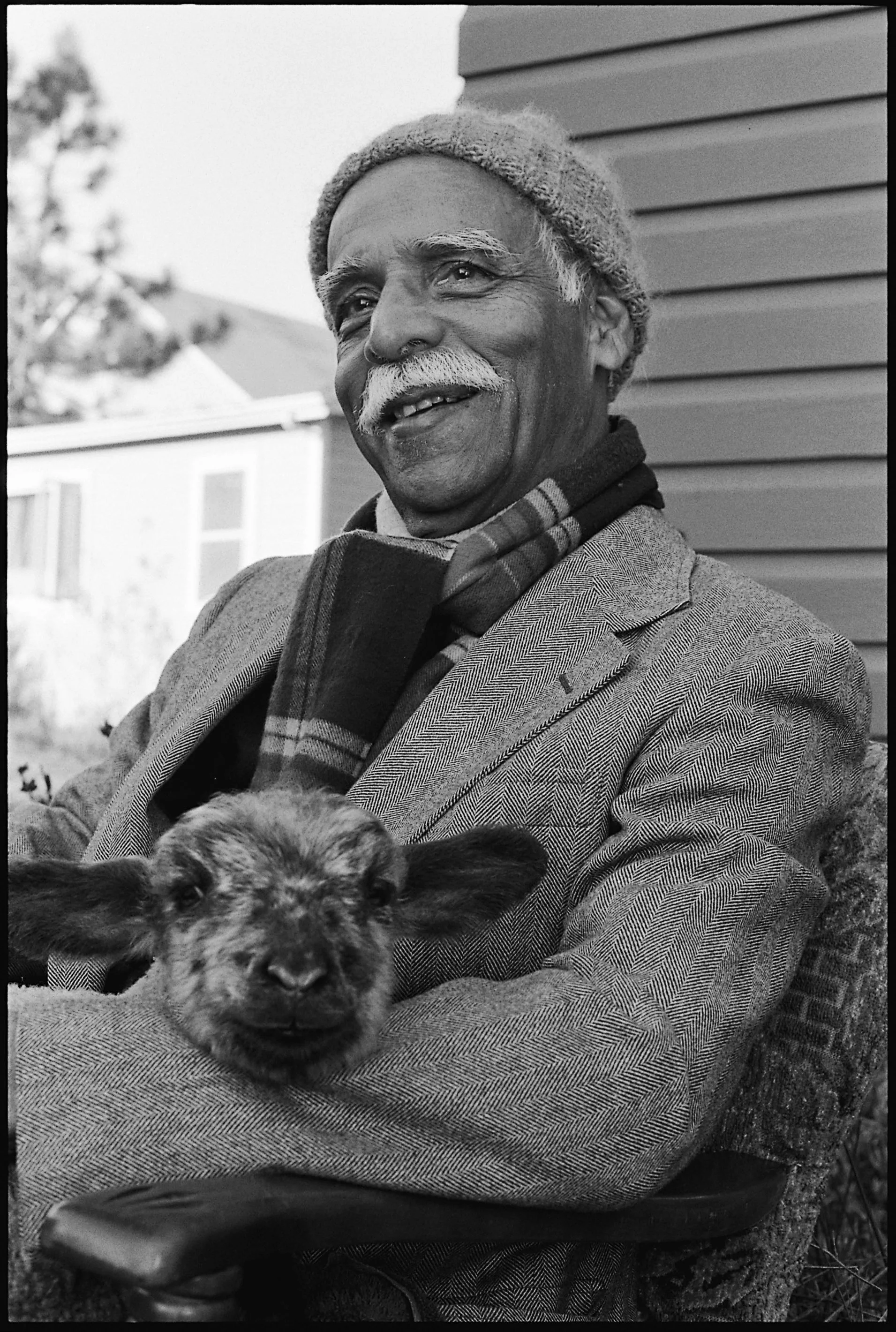
easwaran with goat jpeg-small.jpg

We start the spiritual life wherever we are, not running away from society, but right in the midst of life.   –Eknath Easwaran

We’ve been talking a lot among the YA Blog Team about the idea of harmony with others. Our days are full of interactions with friends, coworkers, neighbors, family, and strangers, and often we find some of these interactions difficult to navigate. In fact, sometimes managing all these relationships can be overwhelming! This week we’d like to share an audio talk from Easwaran where he speaks about living in harmony with others, and oneself.

In the midst of personal struggles, it can seem as if our spiritual practice might be easier if we could somehow take off and leave those challenges behind, but Easwaran always viewed the landscape of personal relationships as the perfect place to practice the spiritual life.

To meditate and live the spiritual life we needn't drop everything and undertake an ascent of the Himalayas or Mount Athos or Cold Mountain. There are some who like to imagine themselves as pilgrims moving among the deer on high forest paths, simply-clad, sipping only pure headwaters, breathing only ethereal mountain air.

Now it may sound unglamorous, but you can actually do better right where you are. Your situation may lack the grandeur of those austere and solitary peaks, but it could be a very fertile valley yielding marvelous fruit. We need people if we are to grow, and all our problems with them, properly seen, are opportunities for growth. Can you practice patience with a deer? Can you learn to forgive a redwood? But trying to live in harmony with those around you right now will bring out enormous inner toughness.

YA-Easwaran

In the talk this week, Easwaran shares practical tips and wonderful anecdotes about finding harmony with others, and with ourselves.

We’d love to hear your thoughts about the talk in the comments below:

  • What strategy about personal relationships stood out to you?
  • Was there any other aspect of the talk that struck you?


All About Books

We've talked a lot about books on the blog: Gary talked about finding the book Dialogue with Death, Sagar shared how he uses spiritual reading for inspiration, Nikhil reflected on how Easwaran's books helped him integrate his Indian heritage into his day-to-day life, and Chanel, Lisa, and Mira shared how they formed a book club for satsang. This week we want to highlight two books:  Easwaran's translation of the Bhagavad Gita, and With My Love & Blessings.

YA-Books

 In his introduction to his translation of the Bhagavad Gita, Easwaran writes:

The Gita does not present a system of philosophy. It offers something to every seeker after God, of whatever temperament, by whatever path. The reason for this universal appeal is that it is basically practical: it is a handbook for Self-realization and a guide to action.

Some scholars will find practicality a tall claim, because the Gita is full of lofty and even abstruse philosophy. Yet even its philosophy is not there to satisfy intellectual curiosity; it is meant to explain to spiritual aspirants why they are asked to undergo certain disciplines. Like any handbook, the Gita makes most sense when it is practiced.

Whenever we return to Easwaran's translation of the Gita, we are always reminded of the poetry of the text itself, and are struck by the narrative aspect – after all, it's part of one of India's great epics. This month, Easwaran's translation of the Bhagavad Gita is available at a special low price as an e-book as part of Amazon's monthly deals. Especially for YAs on a budget, this is a great opportunity!

Another book which is a special favorite of ours is With My Love & Blessings, a book that chronicles Easwaran's teaching years (1966–1999) through pictures and excerpts of Easwaran's writings. We particularly love the photos and stories of the YAs who joined Easwaran in his early days, and it also contains one of our favorite Easwaran excerpts which always leaves us eager and inspired:

Just as there was a cultural renaissance in the West several centuries ago, the world needs a spiritual renaissance today. Just as there was an industrial revolution two hundred years ago, the world needs a spiritual revolution here and now. And the wonderful feature of a spiritual revolution is that it cannot be accomplished by governments or multilateral corporations. It can be brought about only by little people like us: every man, every woman, every child, changing their personality from selfish to selfless, from human to divine.

For this we need, first and foremost, a higher image of the human being. So far the human being has essentially been looked upon as a separate, physical creature that enters life through one door at birth and disappears through another at death. Every mystic in every great religion, on the basis of personal experience, has rightly called this an utterly superficial and distorted view. So the first step in a spiritual revolution is for the parents and teachers to practice spiritual disciplines that replace this low image with a lofty one. This is where our mode of meditation excels, for the passages we meditate on exalt the human being to the stars. What we meditate on, we become. What parents and teachers practice, children will absorb.

Since its publication, With My Love & Blessings has only been available as a more expensive, large hardbound book. Just recently, the BMCM released an affordable e-book version and though we're obviously quite fond of our hardbound versions, we're thrilled that there's a more mobile version of the book, and are pleased at the increase in access!

We'd love to hear from you! Share your thoughts in the comments below:

  • Which Easwaran books have you been reading recently?
  • Do you have any favorite excerpts from the Gita translation or With My Love & Blessings?