Slowing Down – Very Slowly

In this week's post Gretchen shares her ongoing challenges, opportunities, and insights about practicing slowing down.

Blue-Mountain-Blog-Gretchen

Many of us begin this path with a sense that some of Easwaran's eight points are more challenging for us than others. For me, "slowing down" was more than challenging: it was just about impossible. While I did manage to meditate each morning, I was often distracted, and would routinely jump up from the chair and begin a very intense workday of visiting hospice patients in their homes, tending to my elderly mother, helping with my children and grandchildren, volunteering at church, and caring for two frisky, gigantic Great Danes – at breakneck speed. 

Life was too full, and far too fast. The cell phone, which required about fifty work-related messages per day, was always on and always within reach. Stimulation was constant. I remember someone suggesting, at my first Tomales retreat, that I repeat the mantram three times between each patient visit. It was a wonderful idea, simple and sensible, an excellent way to slow down. Problem was, I got home, gave it a try, and just kept forgetting to do it...

Because the eight points are interconnected, this problem with slowing down impacted all the others. It is hard to be one pointed, for example, when you are in such a rush that you routinely pick up work messages on your cell while driving between visits. Spiritual fellowship is hard to develop if you come home so exhausted that you collapse before making it to satsang, and find yourself numbly diddling around on the computer instead.

I look back on those days and see a path strewn with jewels. The first jewel was an unexpected, blind trust in Gandhi's insight that "full effort is full victory."  I had – for reasons beyond my own understanding – engaged in a deep inner battle, one that seemed impossible to win. Simply put, I was not powerful enough to slow down of my own accord. All I could do was put in my best effort, and hope for help. 

That was the second jewel: a distant sense that I was being helped.  

Life had somehow taught me that there was no real help; that all of us had to figure things out for ourselves, prove ourselves – in a world that in general demanded much and judged harshly. This was surely the force behind my own unmanageable impulse to go faster, do better, and accomplish more. I was trying to prove something – to the world, to the people around me, but most of all, to myself.

A sense of help – from Easwaran, from the mystics, from the Blue Mountain Center of Meditation and other aspirants – was almost frightening at first, so strong was my compulsion to prove myself. But in spite of that, I could feel the help coming in. It was flowing towards me whether I deserved and understood it or not. I could feel it in the beautiful memorized words, the gentle retreats, the mantram walks, the kindness and wisdom of others, the deepening sense of peace and well-being that caught me off guard, and invited me to trust the path I was walking – or more often, running. 

At last, at last, that impulse to rush was beginning to diminish.

A third jewel, rough-cut to be sure, was a diagnosis of rheumatoid arthritis (RA), which made slowing down an imperative, not just an intention. RA is chronic and can be debilitating, but far less so if stress and daily life are well managed. It was this diagnosis that allowed for much greater mastery of all the points, but especially slowing down.

Gradually, the jewels began to tumble in then, year upon year, bright and beautiful. Now, a few more years along the path, I can identify several life changes that would have been impossible for me to make earlier on, each a great gift unto itself:

Switching to a less stressful job. Attending satsang regularly. Writing a page of mantrams daily. Moving more slowly - and therefore more deeply - through passages during meditation Sleeping, exercising and eating well Returning to Tomales annually for retreat and re-centering Balancing life in a spirit of gentleness, rather than dashing through it

It all sounds so simple!

Blue-Mountain-Blog-Mantram-Notebooks

Gretchen's mantram notebooks

Simple but not easy, for some of us. I look back and smile with great tenderness at that former self who spent several years learning the simple gesture of putting down a cell phone while driving...

Time continues to bring change. My mother died, not so long ago. The wild, unruly Danes have died as well. Grandchildren keep arriving, each one bright eyed and full of life. My new puppy Beatrice loves the mantram walks we take each day, and never hesitates to slow down and rest along the path if she needs to.

Blue Mountain-Blog-Gretchen
Blue-Mountain-Blog-Gretchen

Time and change have only brought me to believe this more deeply than ever before: full effort is full victory.  

And also this: help surrounds each one of us.  
Wishing you the blessing of jewels on your journey, too – especially the parts that seem impossible.
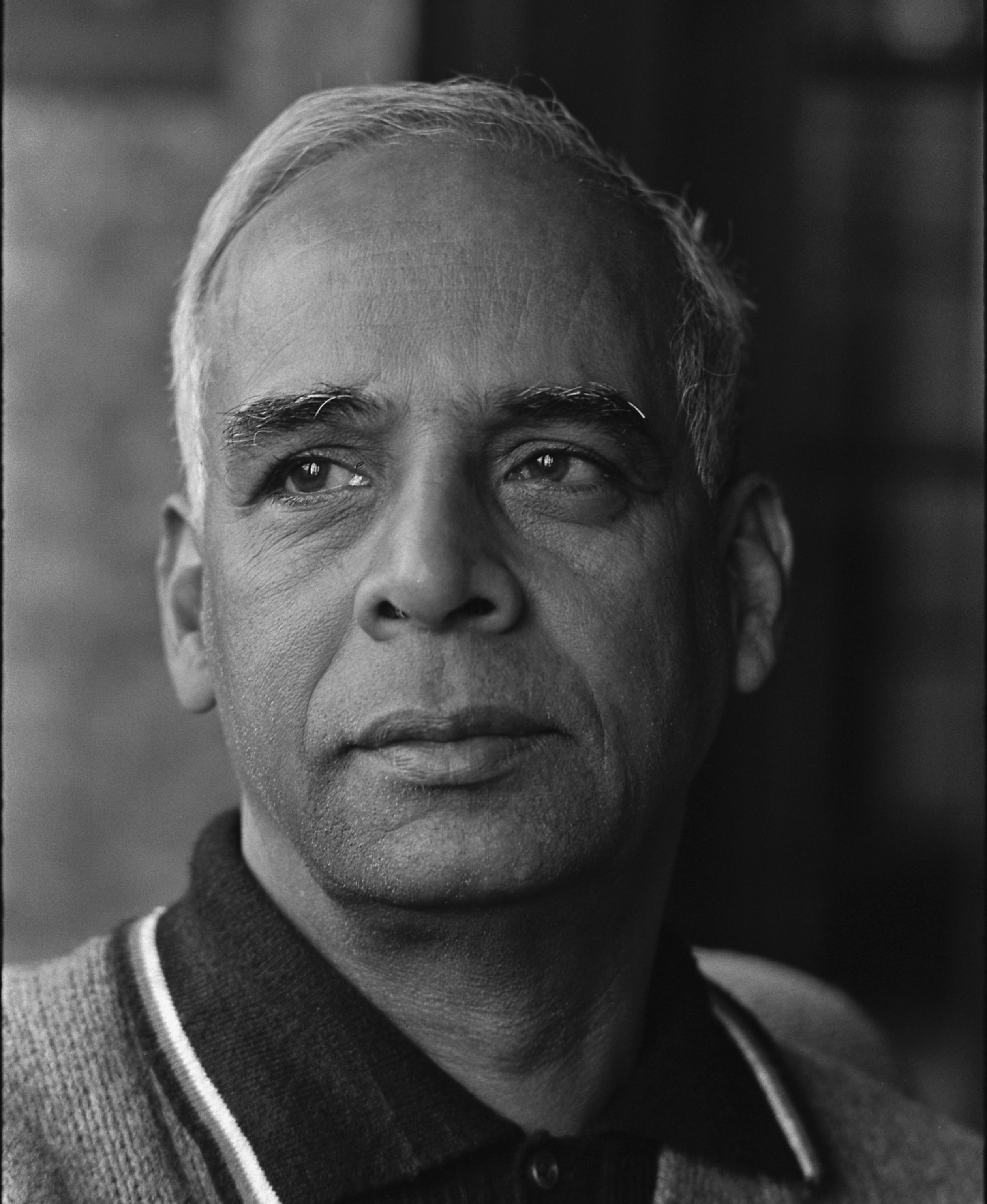
Eknath Easwaran: The Power of Ordinary People

This week we share an excerpt from Eknath Easwaran's book The Bhagavad Gita for Daily Living Volume 2: Like a Thousand Suns. This short excerpt contains one of our favorite images of the power of community.

Blue-Mountain-Blog-Easwaran

When you are always aware of the unity of life, you see the Lord in every living creature. Then you welcome every opportunity to serve others, and you become incapable of doing anything at their expense. To put it more personally, you see everyone as dear to you; every child is your child, and every dog is your dog. I don’t think anyone has ever put it more beautifully than the Compassionate Buddha, when he tells us that we should love and protect every man, every woman, every child, every creature on earth, the way a mother loves and protects her only child.

If we keep our eyes on this supreme goal all the time, our life will be full of meaning; every decision we make will be significant to the whole. Every morning we will renew our decision not to live for ourselves but to do what adds to the welfare of everyone, and once we have learned to make this decision we can live in any country or any society and give a good account of our lives. Of course, everyone does not make the same kind of contribution. Some are doctors or nurses, some are teachers, some are mothers or fathers. But whatever our place in life, each of us has a contribution to make that can be made by no one else. Each of us can learn to apply the changeless values of selfless living to his or her own life, and because the Lord dwells in every one of us, none of us need ever be diffident about our capacity to leave the world a little better than we found it.

There is a story from the folklore of India that illustrates this point effectively. On the first day of the sun’s creation, people expected to see it shining in the sky forever. No one knew that the sun had to dip into the water in the evening for a twelve-hour bath so that it could rise refreshed in the morning. So on the first evening of creation, everyone was terrified to see the sun about to set and the darkness beginning to spread across the world. They didn’t know what to do. Then one little person stood up and said, “I’ll light a candle.” Someone else added, “I will too.” Here, there, everywhere, millions of people started lighting candles, and soon the whole world was filled with light again.

This simple little story shows the importance of every person on earth, no matter how insignificant our lives may appear to be. Ordinary though we may be on the surface, within the heart of each of us lie tremendous capacities for love and service, and if we can keep our eyes always on the Lord of Love, there is no problem on earth too dire for ordinary people like you and me to solve.

“We Teach By What We Are”: Working with Children and the Eight Points

Meet Stephanie, a passage meditator living in Petaluma, California. Stephanie shares how she integrates the eight points into her work with children.

While reading in The Bhagavad Gita for Daily Living (Volume 2) a few days ago, I came across this rich comment by Easwaran on pages 228-229:

“Brihaspati is often mentioned in the Hindu scriptures as a tremendous spiritual teacher. It is not possible for the vast majority of us to approach the stature of such a teacher, but it is important to recognize that all of us, whether we like it or not, are in the role of teacher to those around us every waking hour of the day. This is especially clear in our relationships with children. Anyone who spends much time with children knows that they do not do what we ask them to do but what they see us doing. Education is based on a breathtakingly simple proposition: we teach by what we are. It is easy to buy a book on patience and security and give it to our children, but if we are impatient ourselves, no amount of reading will teach them to be otherwise. If we want our children to be patient, secure, and selfless, we have to give them an example of these qualities in our personal life.”

Blue-Mountain-Blog-Stephanie

To this end, I am blessed to work in a Montessori preschool and kindergarten classroom (ages 3-6 years) with another passage meditator. Here are some ways that we incorporate the eight points into our non-sectarian, yet spiritual environment and consequently, share our sadhana (spiritual practice) with our children.

Meditation

Easwaran recommended that children wait until they’re 18 to start passage meditation – it takes a certain amount of life experience to want to train the mind. For kids and teens under 18, there are lots of creative ways to use passages which convey the high ideals and transformational power. Take Sri Sarada Devi’s “The Whole Word is Your Own,” as one of many possible examples for a non-sectarian setting:

I tell you one thing – If you want peace of mind, do not find fault with others. Rather learn to see your own faults. Learn to make the whole world your own. No one is a stranger, my child; this whole world is your own.

In our setting, it works for us to use passages together at “circle time” or in moments of transition, such as waiting at the door before going out for recess together. It’s rather delightful – and common – to hear them quote passages like this one to one another at other times in the day. But passages can also be read as inspirational literature during quiet moments, such as relaxation or nap-time.

As they get to know me, I tell children that I am a meditator, and about how I meditate, using this passage as an example, something like: when I meditate, I sit like this (showing them my straight posture), and I close my eyes like this (closing my eyes) and I say these words slowly in my heart (and then I quiet down and silently repeat my passage). The intention is only to show them that I meditate and to prepare them – for if they do turn to meditation when older, they will have a tool that they learned early on; it won’t seem foreign to or distant from them.

As a teacher, meditation is my anchor. I’m on a very strict morning schedule – can’t be late for school – and I know that the source of my energy is derived from giving my best in my meditation every morning and every evening. When I don’t get enough sleep or have too many distractions in meditation, it affects my state of mind all day long. If I am to be as patient as possible, I need to “put my meditation first” – make sure I get enough exercise, and sleep, as well as to refresh my passages regularly. Also, Sri Easwaran reminds us time and again that we become what we meditate on, so, in the effort to be of service to the children with whom I work, who are extremely idealistic, it behooves me to try my very best to align myself – mind, body and spirit – with my own highest ideals. Passage meditation is a tool to do this consciously.

Repetition of a Mantram

There is a lot of time to repeat the mantram while at school. For instance, each day I get a 10-minute break before lunch. I use it for a fast mantram walk. Inside the classroom, whenever I am near a child, I use it as a “mantram reminder,” to repeat my mantram in my heart to share a sense of peace with the being next to me. This also requires that I use the mantram enough in my free time in order to desire to draw on it at times of work. Once, a child was starting to rub against one of my “sharp edges” of personality – in other words, I was losing my patience – and I took a moment to say my mantram and wrote my mantram for this child on my short break. Similarly, I write mantrams for the parents, in gratitude for also rubbing down my sharp edges, and to wish them well in their own challenges at home as they try to deepen their skills of being kind, patient, secure, and loving.

Slowing Down

In our classroom, slowing down fits into our curriculum under the basics of “grace and courtesy.” We train our bodies in grace by moving slowly throughout the room, and taking our time with our work – going through any job we take out from beginning to end, taking care to understand what the job requires all the way to putting it away nicely for the next person to use. Running is OK for outside, but we never run in our classroom. As Gandhi put it and Sri Easwaran systematized in our practice, “undue haste” is one of the ways that violence expresses itself; to create a peaceful atmosphere, we slow down. And we explain this to the children, and practice it ourselves as grown-ups. 

Similarly, we try to show children in our classroom that there is time for everything. This is how they learn. Many children, for instance, cry about zipping up their coats on their own because they are usually rushed at that time. At our school, we have all of the time in the world to work on any job. We won’t hang up a child’s coat for them, but we won’t judge them for taking a long time to do it. We let them take their time, and gently explain again and again that all skills are learned with patience and practice. How important it is to give children a chance to practice – and how satisfied and proud of themselves they are when they master some basic skill like coat zipping, buttoning or even tying their own shoes!

Blue-Mountain-Blog-Stephanie

Putting Others First

This point is integral in our classroom culture – with sixteen children moving about a shared space, each one working on something different from the other, we are constantly drawing our attention away from ourselves and what we want only to what works for everyone. If a child wants to do a job that makes a lot of noise, we don’t ask them to stop, but we do remind them that there are others in the classroom who might be distracted from their learning by the noise, and invite them to another space, maybe outside. Or if a child wants to listen to music and dance while another child is reading, we make sure that headphones are available. Putting others first, in other words, is about finding solutions that work for everyone. Our classroom includes a “kindness tree” where children place a flower on a branch when they realize that they have done something kind for others as a form of externalizing their awareness of the putting others first process. Another example is when we wait for everyone to be served (or to serve themselves) before we have a snack or lunch.

Teaching this skill to children is again a question of modeling it – in my words and in my actions in the classroom. And we talk to the children, as well, about how it feels to think about others. But it follows me home, too! If I want to be a better teacher, a better person for the children to work with, it helps that I deepen my practice. When I spend more time using my mantram or go to sleep on time so that I am not deprived of rest and have had my regular morning meditation, I’m putting those around me first, especially these children.

Blue-Mountain-Blog-Stephanie

One-Pointed Attention

This is another culture point in our classroom: we do one thing at a time and give what we do our full attention – to the extent that we are able, as this is a skill that requires practice and deepening like anything else. If children are eating, they are eating – paying attention to chewing all of the way, swallowing, and appreciating the process that got the food to our plates. It’s practical: children can choke on food when they are not giving it their full attention. And it’s spiritual: when we give anything our one-pointed attention, we are growing our capacity to concentrate and ultimately to love. In our classroom, this point is combined with doing one thing at a time, from start to finish: take something out, put it away; want to take out a job, carry one thing at a time, and so on.

The joy that I get from practicing one-pointed attention with the children is immense. I have to be constantly present, constantly working to put aside my own thoughts about my other projects, my own work or interests, myself, and dedicate myself fully to giving the children in class my on-going one pointed attention. It’s a great gift; and it builds the bonds between us.

Training the Senses

This is a modeling activity, again. When I can show the children that I am flexible with my likes and dislikes, they are encouraged to do the same. The important part here is to help them deconstruct any like or dislike as it arises – what is behind it and what is the reality? For example, regarding food, a like or dislike could be a signal for a food allergy, and we want to pay attention to that. But it could also be arbitrary, and that is what we want to understand together – we can, by our own example and encouragement, help the children to start early in learning the fun and daring it takes to challenge our likes and dislikes.

Spiritual Reading

In early childhood, the idea of spiritual reading really goes beyond the mystics, and lands directly in the mystical vision: understanding and experiencing the unity of life. To this end, any book or story that brings out this unity would be good material – including books about the wonders of the natural world.  It brings out discussions of how we are to treat one another and care for our environment. On the other hand, I have found that children respond very deeply to spiritual figures like Mahatma Gandhi because they respond to goodness, and they want to tap into their own “original goodness” as Sri Easwaran calls it. When it comes to people, we try to find books that uphold a high image of what it means to be a human being, and engage the children in discussions about what it means to be selfless, caring, compassionate, emphatic, and secure.  To the extent possible, as people struggling along the path as best we can, such an image should reflect the way we engage with one another and our environment in our classroom.

Blue-Mountain-Blog-Gandhi

Spiritual Fellowship

The emphasis of our classroom is on practice. No one is perfect. All of us are working on becoming better human beings, and we get to work on it together. Especially the teachers. To this end, we encourage the children to work and play with everyone. A common refrain is “we are all best friends,” not just Sally and Molly or Joe and Sean – all of us.

***

Why do I do this work, combining the eight points with work with children?

Sri Easwaran makes the following comment on page 165 of the Bhagavad Gita for Daily Living (Volume 2):

“When I want to see how well someone is doing in meditation, I don’t ask if she is seeing visions or hearing voices; I look to see how easily that person can go against his or her self-will.”

When we are really paying attention, working with children can give us some serious insight into our own self-will because they suffer the brunt of it over and over again. The method of passage meditation can help. Anything we do to minimize our self-will can do a great service not only to the children in our lives, but to all of humanity, because the well-being of children – mind, body, and spirit – determines the well-being of our collective future. There’s no way around it: at the end of the day, to help the world, we don’t change kids, we are called, as Easwaran reminds us again and again, to quietly change ourselves, first and foremost, because when we change our consciousness, children are no longer problems to be solved or heads to be filled, but spiritual beings to appreciate, nurture, and support in every way possible.

Blue-Mountain-Blog-Stephanie