Images of the 2015 YA Cohort Program

Earlier this month, YAs from around the world gathered together for a weeklong retreat at the BMCM headquarters in Tomales, California, and then spent a weekend together in a spiritual household at nearby Dillon Beach. 

YA-Cohort-Group

The weeklong retreat, with the theme "Deepening Meditation," was a precious chance to spend one day unpacking each of the eight points and thinking about how that point could be used throughout the day to help deepen our meditation. 

The schedule had plenty of time for reading in the gardens, memorizing new passages, mantram beach walks, and spiritual fellowship with other retreatants. There was also the traditional YA volleyball and ice cream outing and this year – a brand new tradition – mantram hula hooping!

YA-Garden
YA-Beach
YA-Weeklong
YA-Volleyball
YA-Volleyball
YA-Icecream
YA-Icecream

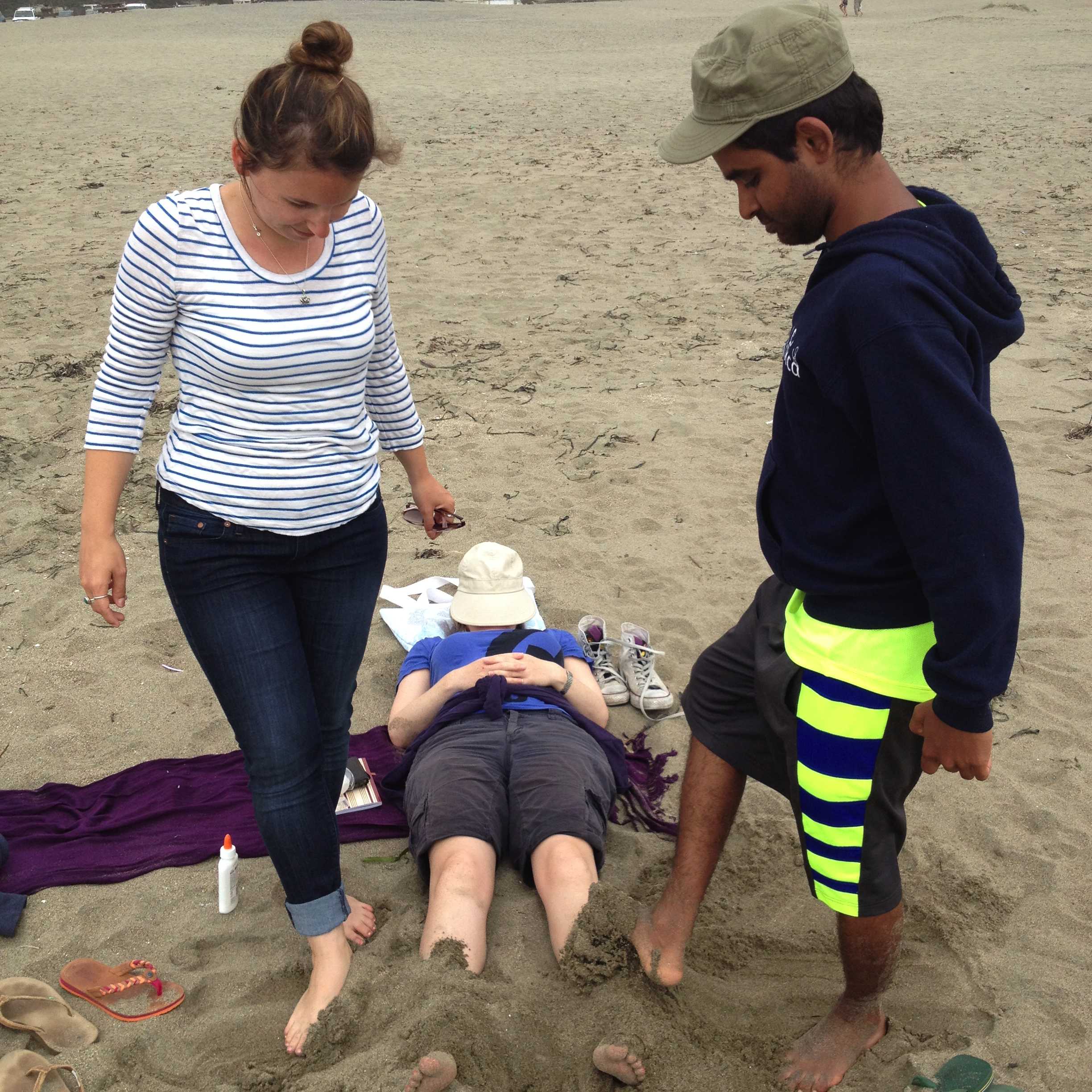
When the retreat ended, YA Cohorts packed up and moved to a house at Dillon Beach. We got lucky with warm and sunny beach weather (often unheard of in Northern California!) and spent a lot of time taking beach walks, beach naps, and other beach shenanigans.

Spending the weekend together was a great opportunity to see what living in a spiritual household is like. The group set our own schedule, took turns cooking, ate meals together, enjoyed spiritual reading, worked out times for meditations which would work for everyone, and even tried a meditation session on the dunes! We had great satsang, relaxation, and a lot of fun, and we also appreciated the transition from the intense retreat atmosphere to a YA spiritual household, which helped us transition again into our everyday lives at home afterwards.

YA-Beach
YA-Beach
YA-Beach
YA-Beach
YA-Beach
YA-Beach
YA-Beach
YA-Beach
YA-Beach

We had a great time with the 2015 Cohorts and are looking forward to next year's program!

"Deepening Meditation" & "The Goal of Life"

The YA Blog Team just finished a weeklong retreat with the theme "Deepening Meditation." We'll tell you more about the retreat and the conclusion of the 2015 Cohort Program next week, but we wanted to share the theme as food for thought first!

YA-Dillon-Beach

Dillon Beach, California site of mantram beach walks during the weeklong retreat.

This week, as we ease ourselves back into our daily lives after the retreat, we've been revisiting the Easwaran mp3s on the blog and have been re-listening to Easwaran's talk "The Goal of Life" which we posted in the beginning of 2014. Obviously the topic has been inspiring, but we've also enjoyed how Easwaran's slow way of speaking in this talk has helped us keep our minds slowed down.

We invite you to join us in re-listening to the Goal of Life Part 1 and Part 2. We'd love to hear your thoughts in the comments below. If you've listened before, we'd be especially interested if anything new stands out to you!

Easwaran Q&A on Training the Senses

This week we're pleased to share with you an excerpt of a Q&A from the most recent Blue Mountain Journal. We've been especially eager for this issue because of the topic – training the senses. Throughout the journal Easwaran shares practical tips on how to approach training the senses as well as inspiration about why this point is so important. 

There is also a new journal discussion group underway, but there's still time to join – just email 20Tips@easwaran.org. All journal readers are welcome!

YA-Easwaran-Journal

Excerpt from the Summer 2015 Blue Mountain Journal: Eating in Freedom, Training the Mind

Why should we train the senses?

Easwaran: I had a friend in the olden days who used to ask that. He would say, “I understand meditation, but why bring in all these other points? Isn’t meditation enough?”

In particular, he simply detested any reference to sense training. Meditation yes, even mantram yes, but for heaven's sake, don’t talk about sense training.

So I said, these all help each other. Sense training is not only necessary for health; sense training helps the mind be one-pointed, just as a one-pointed mind helps train the senses. Both help govern negative passions, and transforming passions helps to still the mind, which is the goal of meditation.

So where do we start?

Easwaran: Attacking the mind directly is extremely hard, but there is something you can attack directly to deepen your meditation, and that is eating. Through your eating habits—especially likes and dislikes in eating—you can get at the mind indirectly.

You can begin simply by ceasing to choose foods that don’t benefit your health and instead choosing foods that do. With this simple resolution, you’ll strengthen your will and deepen your meditation – and please your physician, too.

I first became interested in changing my diet for the better under the influence of Mahatma Gandhi, when he was writing weekly articles or his paper Young India. Diet was an important topic for him, and he experimented all his life to discover the very best. Indians can be quite traditional about food; they always want the dishes that mother used to make. But Gandhi put tradition aside in favor of health, and his example appealed to me deeply.

I too, of course, had been brought up on Indian cuisine – first Kerala style, later Central Indian. And I had enjoyed it all thoroughly. It never occurred to me to ask what the purpose of food is. Gandhi’s example prompted me to ask; and I concluded, to my great surprise, that food is meant to strengthen the body. So I started changing. I began to eat fruits and vegetables that wouldn’t have appealed to me in earlier days at all. As I began to focus more on health, I found that I enjoyed salads, and that highly spiced curries no longer seemed palatable. I was prepared now to agree with Gandhi’s dictum that taste lies in the mind.

Today, if I were to eat junk food, my body and palate would protest. I work every day from morning till night, every day of the year, and the energy for this kind of work comes partly from food. Eating what gives you energy for selfless service, keeping your body healthy and light, is a matter of teaching your taste buds what to enjoy.

As always, the purpose here is training the mind. With training, your senses begin to listen to you, and when your senses begin to listen to you, your mind becomes calm and clear. Then you always have freedom of choice.

On the other hand, far-reaching though these changes were, I don’t think I really understood what Gandhi was getting at until much later, when I began to meditate. It was then that I made what was for me a remarkable discovery.

Can you say more about that?

Easwaran: When I needed a lot of drive to go deeper in meditation – for example, if I had a problem to solve that required more energy and creativity than usual – I found that I had only to pick a strong sensory urge and defy it. When you suddenly need cash, don’t you go and shake the piggy bank? It was a little like that. I would look around intently to see what kind of cravings I had, and then I would walk up to a really big one and say, “Come on, because I am really broke.” The desire would come on strong, and I would push it back and come out with both my pockets loaded.

YA-Easwaran-Journal

My whole outlook on desire changed. Formerly, when a strong urge would come, I used to do what everybody does: yield to it, and not reluctantly either. Now I began to rub my hands with joy at the prospect of doing just the opposite. “Here’s another desire! It’s strong, so I’ll gain even more by defying it.” I began to understand that any strong desire, when it is defied, generates a lot of power.

That sounds very hard!

Easwaran: Not every desire, I should say, is to be rejected out of hand. I distinguish very carefully between harmless desires and desires that are harmful to the body or mind – or, of course, to those around you. If the desire is for food that is wholesome, you may well be able to yield with full appreciation. But if it is a desire for something sweet that you don’t need, you will find you can get equal satisfaction out of refusing it. It’s a deceptively simple change in perspective. Your attitude toward the body becomes very different: you see it no longer as an instrument of pleasure, but as an instrument of loving service.

Isn’t it all a bit grim?

Easwaran: You don’t have to give up all desires to be strong; you just have to give up all selfish desires. For example, when you have food that strengthens the body, especially when it is cooked and served with love and eaten in the company of family or friends, you don’t need to pass it up just because you like the taste of it. The Lord would say, “Dig in; I am in that desire too."

I am very much like my Grandmother in this respect. When there was a feast coming I don’t think she ever thought about the food before or after; but while she was eating I have never seen anyone enjoy a meal more. At our ashram, whenever there is a special occasion, whether it be Jewish or Christian, Hindu or Muslim, we really have a feast. And when someone comes in and puts a steaming platter of blintzes on the table, we don’t turn our eyes away and say, “We can’t eat blintzes; they’re not mentioned in the scriptures.” We sit down, repeat the mantram, and polish them off.

On the other hand, you can’t expect Sri Krishna to be present in, say, Puerto Rican rum, which you drink when you can’t solve a problem. There the way to celebrate is to ignore the rum and solve the problem; then, if you still want to celebrate, ask for another problem and solve that one too.

The question in all these matters is, are you doing this for yourself or for others? In other words, we don’t need to turn our backs on the innocent delights of life to be spiritual. We can participate fully in life as long as we are trying our best to put those around us first.